

Building the Institutional Architecture
of Partnership in Utilities
Part I — Beyond Stakeholder Lists: Why Strategic Partner Relationship Management Is Becoming Critical for Utilities

This illustration visualizes Part I’s core argument that utilities no longer operate at the center of a simple service chain, but within a dense ecosystem of institutions, technologies, infrastructure, and stakeholders. The paired figures at the center suggest partnership as an operating discipline, while the surrounding energy landscape conveys the interdependence, coordination, and strategic alignment now required for effective utility performance.
Intro to the “Building the Institutional Architecture of Partnership” Trilogy: Utilities are entering a period in which relationships can no longer be managed as a peripheral function. In increasingly complex operating environments, success depends not only on assets, operations, and regulation, but on the institution’s ability to manage a wider ecosystem of regulators, government entities, contractors, technology providers, and community actors through a clear and disciplined model. This trilogy argues that Partner Relationship Management, or PRM, is becoming a core institutional capability for utilities. It is therefore about much more than communications or software. It is about how a utility structures the relationship layer around the ecosystem that shapes delivery, resilience, trust, innovation, and long-term value.
The trilogy follows a deliberate progression from diagnosis to design to digital and operational enablement. Part I explains why this matters by showing that utilities now operate in dense stakeholder and partner ecosystems and that informal relationship handling is no longer enough. Part II addresses how PRM should be designed and operationalized as an operating model built around mapping, segmentation, governance, journeys, measurement, and implementation. Part III examines how PRM should be enabled through the enterprise stack, including ERP, CRM, SRM, integration, and digital sovereignty.
Note to readers: A short explanation of the key acronyms used in this article, and how they relate to one another in the utility operating environment, appears at the end of Part I.
Reading Time: 45 min.
All illustrations are copyrighted and may not be used, reproduced, or distributed without prior written permission.
Summary: This Part I examines why utilities can no longer rely on informal relationship management in an environment defined by regulatory complexity, infrastructure interdependence, public accountability, and strategic transformation. It shows how modern utilities now operate within broad ecosystems of regulators, government entities, contractors, suppliers, technology firms, and communities, where fragmented engagement can become a direct source of operational and strategic risk. The article traces the shift from ad hoc stakeholder handling to the need for a more structured institutional model, concluding that relationship management must now be treated as part of the utility’s core operating architecture. The overall arc is: the changing utility landscape → the limits of informal engagement → relationship complexity as operational risk → the inadequacy of traditional stakeholder handling → the need for institutional relationship architecture → why this is ultimately a PRM question.
From Administrative Order to Ecosystem Complexity: Why the Old Model No Longer Holds

ESB Networks, Dublin, Ireland: ESB Networks is a strong example of why modern utilities can no longer treat external engagement as a secondary activity managed at the margins. Its formal Stakeholder Engagement Strategy & Plan is tied directly to the broader ambition of delivering the electricity network for Ireland’s cleaner and more electrified future. That matters because it shows a utility explicitly recognizing that transformation depends on working through a structured ecosystem of external actors, not just through internal operations alone. Rather than relying on ad hoc outreach, ESB Networks organizes engagement through defined priorities, planned activities, and a visible institutional approach. This is a utility operating through ecosystem coordination, not administrative isolation.
There was a time when many large institutions could manage external relationships through a combination of hierarchy, precedent, and personal networks. A regulator was a regulator, a supplier was a supplier, a ministry was a ministry, and a contractor was largely viewed as a delivery mechanism. Relationships certainly mattered, but they were often treated as discrete, transactional, and secondary to the “real” work of the institution. The organization did not need to think of its external environment as an interconnected system. It only needed to maintain enough order to keep essential interactions functioning. That older model made sense in a more stable administrative world. Institutions were often more vertically organized, external dependencies were easier to classify, and the boundaries between internal operations and external relationships were more clearly defined. Engagement could be episodic. Coordination could be issue-specific. Much of the intelligence needed to manage key relationships could reside in experienced individuals who knew how to navigate the environment through familiarity and judgment.
That world has changed.

DEWA, Dubai, UAE: Dubai Electricity and Water Authority, based in Dubai, shows why utilities can no longer operate through isolated departments and informal external contact alone. In its governance materials, DEWA explicitly recognizes multiple stakeholder groups and places their rights, roles, and contributions inside a broader governance framework. Its reporting also links board direction, delegated authority, management committees, and organizational structure to the way the institution is run. This is important because it shows that external relationships are not being treated as side conversations handled by separate teams, but as part of the utility’s institutional architecture. DEWA is a strong example of a utility acknowledging that modern performance depends on how well the wider ecosystem is structured, governed, and engaged.
Today, utilities operate in environments shaped not by neat administrative boundaries, but by interdependence. Their strategic success depends not only on what they control internally, but on the quality, coherence, resilience, and maturity of the relationships that surround them. Regulators shape investment logic and compliance requirements. Government actors influence approvals, alignment, and public legitimacy. Suppliers and contractors affect speed, cost, continuity, and quality. Technology partners shape modernization pathways. Communities shape public trust and social acceptance. Financial stakeholders shape expectations around performance, resilience, and long-term direction. In such a setting, the external environment is no longer background context. It is part of the institution’s operating reality.
Utilities feel this shift more sharply because they do not merely produce services. They coordinate systems that are deeply embedded in daily life, political priorities, national development, infrastructure resilience, and public confidence. Their decisions affect affordability, reliability, environmental performance, long-term investment, and social stability. That means their relationships are no longer peripheral channels to be handled when necessary. They are part of how the institution actually functions. The shift here is profound. The management challenge is no longer simply how to engage stakeholders in specific moments. It is how to understand, classify, govern, and improve an entire network of relationships that shapes delivery, risk, adaptation, and strategic execution. In other words, utilities are no longer managing a perimeter. They are managing an ecosystem. And once that is understood, many inherited management assumptions begin to look dangerously outdated.

SP Group, Singapore: SP Group is a useful example of the reality that a modern utility no longer operates inside a narrow service chain. In its annual reporting, SP links regulated networks, decarbonisation, digitalisation, energy solutions, and value creation into one institutional narrative, while describing its mission as empowering the future of energy for everyone. That framing matters because it reflects the actual pressures facing contemporary utilities: they must work through regulators, communities, business customers, infrastructure partners, and new energy actors at the same time. SP Group provides a strong conceptual and visual example of a utility functioning inside a dense and evolving ecosystem, where success depends on coordinated relationships rather than on internal operations alone.
For any utility planning to modernize, expand, decarbonize, or strengthen resilience, the first strategic step is to understand, map, govern, and deliberately orchestrate its ecosystem before rising complexity turns unmanaged relationships into institutional weakness, delivery friction, and long-term operational risk.
OHK has observed that many transformation efforts begin to lose momentum long before the formal program is judged a success or failure. In many cases, the problem is not technical design, funding, or strategic intent, but the institution’s limited ability to recognize how much transformation depends on the surrounding ecosystem. The warning signs usually appear early: (i) external actors are engaged inconsistently across teams, (ii) key relationships rely too heavily on memory and personal networks, (iii) important decisions move faster than the institution’s coordination mechanisms, (iv) leadership assumes alignment exists where it has never been systematically built, and (v) transformation plans treat the external environment as context rather than as part of the operating model itself. These warning signs do not always look dramatic at first. But over time, they expose a deeper institutional weakness: the organization has entered a more complex environment without upgrading the way it understands and manages relationships. That is where the next question becomes unavoidable, namely why informal relationship management begins to fail under pressure.
The Cost of Informality Under Pressure: When Relationships Depend on Memory More Than Design

National Grid, London, United Kingdom: National Grid is a strong example of why informal relationship management is no longer sufficient in large and complex utility environments. It connects long-term success to board-led stakeholder engagement and formal institutional oversight, while its Supplier Code of Conduct standardizes expectations across the supply chain rather than leaving them to personal discretion or local interpretation. That combination is important because it shows that mature institutions do not depend only on individual relationships, informal trust, or scattered practice. They formalize principles, define responsibilities, and embed expectations into the operating structure. National Grid is a useful example of the shift from personality-driven engagement toward a more disciplined institutional model built on governance, consistency, and documented standards.
Many institutions still operate with inherited habits that no longer fit this new reality. They maintain stakeholder lists, but not clear categories of partnership. They hold meetings, but do not define structured journeys. They assign relationship responsibilities, but not decision rights. They track activity, but not effectiveness. They speak about collaboration, but have not yet built the mechanisms through which collaboration can be managed consistently across the institution. The result is a pattern that is increasingly familiar in large organizations: the institution is full of relationships, but lacks relationship architecture.
This weakness can remain hidden for long periods. In stable conditions, experienced people compensate for missing systems. Senior managers remember what matters. Teams rely on habit, trust, or informal escalation. Long-standing personal relationships bridge structural gaps. In fact, informality can appear efficient in calm periods because it avoids procedural friction and makes quick judgment possible. But under pressure, the cost of informality becomes visible.
A senior person leaves, and years of institutional memory leave with them. A project intensifies, and several units engage the same external actor with different assumptions. A regulatory issue emerges, and it becomes unclear who owns the relationship, who should respond, and who has the authority to escalate. A strategic partner encounters multiple versions of the organization, each with different language, different expectations, and different levels of visibility into what the others are doing. At that point, flexibility begins to look like fragility.

CLP, Hong Kong SAR, China: CLP demonstrates what it looks like when stakeholder engagement becomes a managed discipline rather than a loose network of personal contacts and ad hoc interactions. Its Stakeholder Engagement Framework provides open channels for input, while business units are expected to develop project-specific engagement plans based on the broader institutional framework. This is useful because it shows that relationship management can be structured, repeated, reviewed, and improved across a large organization, rather than relying on whoever happens to hold the relationship at a given moment. CLP is a strong example of the end of informality: the utility does not treat engagement as incidental outreach, but as a process with defined expectations, internal consistency, and organizational continuity.
This is why informal relationship management is no longer a benign legacy practice. In complex utility environments, it can become an operational liability. It weakens trust because partners experience inconsistency. It slows decision-making because responsibility is unclear. It increases duplication because multiple departments do overlapping work without coordination. It raises risk because escalation is personality-driven rather than system-driven. It weakens continuity because institutional logic lives in people rather than in durable structures. And perhaps most importantly, it prevents the institution from learning at scale. If relationship knowledge is scattered across conversations, inboxes, individuals, and departmental habits, the organization cannot easily see patterns. It cannot distinguish between strategic and routine relationships with enough precision. It cannot reliably compare performance across relationship types. It cannot institutionalize what works or redesign what fails. It remains reactive even when it looks busy.
That is why the informality problem is deeper than weak communication. The problem is that many institutions still handle relationships as incidents of management, rather than as a designed and governed system.
OHK has also seen that once institutions rely on informal relationship management for too long, the weakness does not remain confined to communication alone. It begins to affect execution, accountability, and the pace of decision-making itself. In these situations, the symptoms are usually practical rather than theoretical: (i) the same external actor receives mixed signals from different parts of the organization, (ii) relationship continuity depends on a small number of trusted individuals rather than on shared institutional memory, (iii) escalation happens through personal access rather than through defined channels, (iv) teams spend increasing time repairing misunderstandings that a clearer structure would have prevented, and (v) senior leadership discovers that apparently active relationships are not necessarily well-managed relationships. What makes these patterns dangerous is that they can coexist with outward signs of activity, responsiveness, and even goodwill. Yet beneath that surface, the institution is carrying growing friction, inconsistency, and exposure. Over time, informality stops looking flexible and starts looking fragile. That is the point at which relationship management can no longer be treated as a matter of habit or experience alone, and why the deeper structural failures of unmanaged ecosystems must be examined more directly.
Fragmentation, Drift, and Invisible Failure: Why Relationship Architecture Matters More Than Activity

Enel, Rome, Italy: Enel is one of the clearest examples of moving beyond basic stakeholder engagement toward a more systematic relationship architecture. In its materiality process, the company drew on engagement across 21 countries, 64 companies, 36 sites, and 463 initiatives. What matters is not only the scale, but the discipline behind it. Enel is not simply asking who to engage. It is building a repeatable system for gathering, prioritizing, and using relationship intelligence across a large operating footprint. That makes it a strong example of the shift from conventional stakeholder handling toward a more mature PRM-style capability.
When relationship architecture is missing, the resulting failures are rarely dramatic at first. They are quiet, cumulative, and often normalized. Yet over time they become deeply consequential. In practice, this gap tends to reveal itself in five recurring ways.
The first is fragmentation. Different parts of the institution engage the same external actor in different ways, often without sufficient visibility into one another’s interactions. A supplier may be managed one way by procurement, another way by operations, and a third way by a transformation team. A government entity may hear different priorities from different units. A strategic partner may have multiple points of contact but no coherent relationship path. Externally, the institution appears inconsistent. Internally, effort is duplicated and alignment weakens.
The second is informality of ownership. Important relationships often depend too heavily on individual capability rather than institutional design. The organization “knows” a relationship matters, but cannot say with precision who owns it, what that ownership means, what responsibilities accompany it, and how continuity is preserved across staff changes. Where ownership is vague, accountability becomes soft. Where accountability is soft, relationships drift.
The third is governance weakness. Many institutions know who they work with, but are less clear on how those relationships should be governed. Which relationships are strategic and require executive sponsorship? Which require structured review routines? Which require formal compliance oversight? Which should remain operational and lightweight? Which risks should trigger escalation, and through what pathway? Without clear governance, relationship management becomes reactive and personality-driven.
The fourth is poor performance visibility. Institutions frequently assume that if meetings are happening and communication is active, relationships must be functioning well. But engagement is not the same as effectiveness. A relationship may be active and still underperforming. It may consume large amounts of attention while producing little strategic value. It may appear stable while masking unresolved friction. Without meaningful metrics, review routines, and feedback mechanisms, institutions cannot distinguish high-performing relationships from stagnant ones.
The fifth is strategic drift. When relationships are not segmented according to purpose, they begin to be managed through the same generic logic. Yet not all external actors matter in the same way. Some are regulatory anchors. Some are innovation enablers. Some are project-critical suppliers. Some are delivery collaborators. Some shape legitimacy and trust. Some are reputationally sensitive. Some carry high continuity risk. If these very different relationships are governed through the same engagement logic, the institution loses the ability to align effort with strategy.

Masdar, Abu Dhabi, UAE / Samarkand, Uzbekistan: Masdar offers a strong project-level example of relationship management becoming systematic across the full lifecycle rather than being treated as one-off consultation. In the Samarkand Solar PV Project Stakeholder Engagement Plan, stakeholder interaction is structured through defined stages that include disclosure, consultation, grievance handling, and ongoing communication during development, construction, and operations. The project emphasizes early identification of affected communities and vulnerable groups, and they provide channels for feedback throughout implementation. This is important because it shows how engagement can be embedded directly into project governance instead of being treated as a separate communications exercise. In that sense, Masdar is a very practical example of the transition from generic stakeholder engagement toward a more PRM-like model.
The deeper problem is not that institutions lack relationships; it is that they often lack the architecture through which relationships become governable, measurable, and strategically useful. And once utilities begin to operate in more complex, interdependent environments, that absence becomes impossible to ignore.

Anglian Water and the @one Alliance, Huntingdon, England: Anglian Water’s @one Alliance is a powerful counterexample to fragmented and unmanaged partner ecosystems. The alliance brings together the utility and eight specialist partners to deliver a large share of its capital investment programme through an integrated model rather than a traditional project-by-project client-supplier structure. That difference is critical. It shows a utility redesigning the relationship model itself instead of simply asking disconnected teams and contractors to collaborate better. The alliance demonstrates that when utilities build relationship architecture into the operating model, they can reduce duplication, strengthen accountability, and improve resilience and performance.
OHK has observed that once relationship problems become embedded in the institution, they rarely appear as a single dramatic failure. More often, they accumulate quietly until fragmentation, delay, and inconsistency begin to shape outcomes across the system. In these cases, the warning signs are usually visible before leadership names the problem clearly: (i) different teams maintain parallel relationships with the same external actor without a shared institutional view, (ii) engagement activity increases but strategic clarity does not, (iii) governance becomes selective and uneven, with some relationships receiving oversight while others drift without review, (iv) performance is inferred from effort rather than measured through meaningful outcomes, and (v) relationships of very different importance are managed through the same generic logic. What makes these patterns dangerous is that they can coexist with apparent motion, responsiveness, and institutional busyness. Yet beneath that activity sits a deeper weakness: the organization has relationships, but not a coherent relationship architecture. Over time, this produces duplication, strategic drift, and invisible risk. That is why the next step is not simply better coordination, but a more serious rethinking of what kind of management discipline utilities now require.
Why Utilities Feel This Earlier Than Others: Critical Services Magnify Relational Weakness

TenneT, Arnhem, Netherlands / Bayreuth, Germany: TenneT is a strong example of why utilities feel relationship complexity earlier and more sharply than many other sectors. Its reporting makes clear that societal acceptance of substations, underground cables, transmission lines, and other energy infrastructure is essential because these assets affect many people and interests. That is what makes TenneT so relevant here. In utilities, misalignment is not merely a communications inconvenience. It can delay infrastructure delivery, weaken legitimacy, and slow strategic transformation. TenneT shows that utilities are not only managing engineering systems. They are also managing relationships around nationally significant infrastructure.
Utilities feel this challenge earlier and more intensely than many other sectors because they sit at the intersection of public service, critical infrastructure, regulation, technology, and long-term capital planning. Their operating environments are dense, visible, and unforgiving. Their work is visible when it fails. It becomes politically sensitive when it changes. It attracts public scrutiny when costs rise, service is interrupted, or new infrastructure is proposed. Even when day-to-day operations appear routine, the system itself is highly interdependent. Reliability depends on equipment, contractors, regulatory frameworks, community acceptance, supplier performance, workforce capability, technical integration, and long-term planning all at once. This means relational weakness quickly becomes operational weakness.
Service continuity depends on coordinated action across multiple actors. Infrastructure modernization depends on long chains of suppliers, engineering firms, technology providers, and implementation partners. Regulatory alignment depends on disciplined institutional engagement rather than intermittent consultation. Public trust depends on clarity, responsiveness, and consistency. Sustainability goals depend on collaboration across policy, finance, engineering, and public-interest actors. Large projects often depend simultaneously on permitting, financing, public communication, technical integration, and delivery readiness.
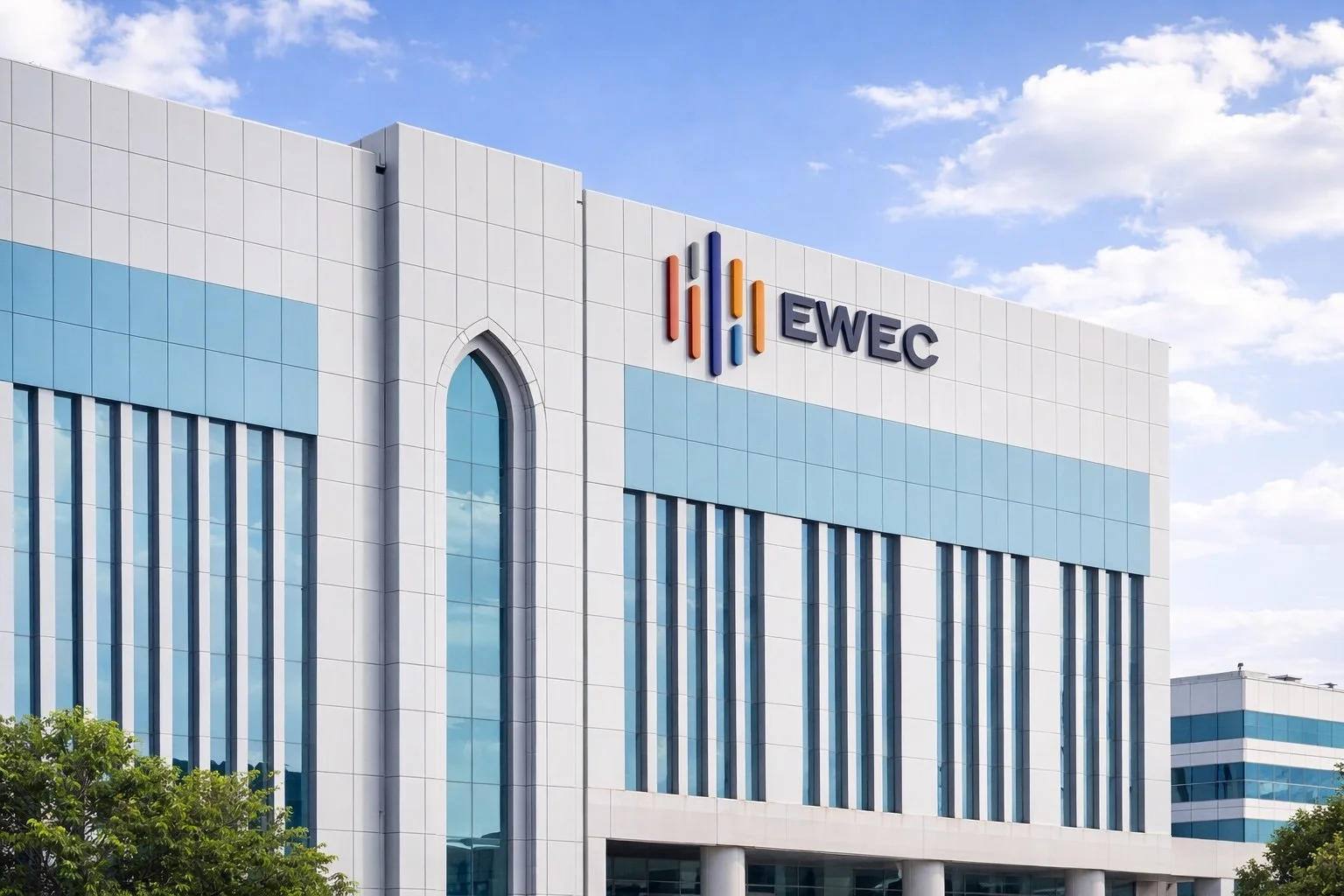
EWEC, Abu Dhabi, UAE: Emirates Water and Electricity Company, based in Abu Dhabi, provides a strong example of why utilities must coordinate multiple actors simultaneously to balance reliability, cost, and decarbonisation. In its forward planning for future capacity, EWEC explains that identifying upcoming production and system needs requires input and guidance from the Department of Energy, TRANSCO, and the wider energy sector. This is useful because it shows that utility planning is not something one function can manage in isolation. It is inherently cross-institutional and depends on planners, regulators, networks, and procurement pathways working in sequence and in alignment. EWEC illustrates why utilities feel this problem first: the complexity of their mission forces structured coordination across a wide ecosystem before strategy can translate into delivery.
In such an environment, poorly managed relationships do more than create inconvenience. They can delay decisions, complicate delivery, undermine trust, increase risk, and slow transformation. They can also create hidden costs. A project may be technically sound but relationally weak. A modernization programme may have sufficient funding but insufficient institutional alignment. A vendor may be contractually engaged but poorly integrated into governance and performance routines. A regulator may be regularly contacted but not systematically engaged in ways that reduce friction over time. This is why utilities cannot treat relationships as peripheral. In their world, relationships are part of the system of delivery itself.
If utilities want to become more resilient, more innovative, more trusted, and more strategically coherent, they must address not only assets, processes, and systems, but the relational architecture through which the institution interacts with the ecosystem around it. This is one of the most important shifts in utility management today. Relationships are no longer just part of the environment. They are part of the institution’s core infrastructure of execution.
OHK has observed that utilities often feel relational weakness earlier than other institutions because the consequences surface directly in delivery, legitimacy, and timing. In these environments, the problem is rarely a lack of effort. It is that operational complexity exposes weaknesses faster and more visibly than in less interconnected sectors. The warning signs are often clear: (i) project timelines begin to depend as much on alignment and acceptance as on technical readiness, (ii) regulatory and institutional coordination becomes a constraint rather than a support mechanism, (iii) communities and external actors react to inconsistency more quickly because the stakes are publicly visible, (iv) supplier, contractor, and technology relationships start to affect resilience rather than just procurement efficiency, and (v) leadership discovers that service continuity itself is shaped by the quality of ecosystem coordination. These conditions do not simply make utilities more complicated. They make them more exposed. Over time, that exposure reveals a deeper truth: in critical infrastructure environments, relationships are not peripheral to execution. They are part of the operating system of delivery itself, which is why the limits of conventional stakeholder management become impossible to ignore.
Beyond Traditional Stakeholder Management: Why Engagement Alone Is No Longer Enough

Iberdrola, Bilbao, Spain: Iberdrola demonstrates that mature relationship management begins with policy, segmentation, and risk design, not with software. Its supplier-management approach includes registration, screening, risk assessment, remediation, and capability development, while linking procurement to broader goals such as sustainability, innovation, supply security, and quality. What makes Iberdrola especially useful is that it shows partner management as an institutional capability grounded in rules, classifications, and differentiated oversight. The software layer may come later, but the operating logic comes first. That is exactly the point: PRM is not just about tools. It is about designing how different relationships should be governed and improved over time.
Traditional stakeholder management remains valuable. It helps institutions identify relevant actors, understand influence and interest, organize communication, and structure consultation. These are essential building blocks, and no serious utility can function well without them. But the demands now facing utilities go beyond traditional stakeholder handling. The older model tends to ask a limited set of questions. Who matters? Who must be informed? Who must be consulted? Who may influence the outcome of a given project, decision, or programme? These are useful questions, but they are still largely engagement questions. They focus on interaction, communication, and issue-specific alignment.
What utilities increasingly need are relationship questions.
What kind of relationship is this?
What strategic purpose does it serve?
What level of governance does it require?
What ownership model applies?
What lifecycle stages should structure the relationship?
What service expectations or review routines are appropriate?
How should risks be escalated?
What does success look like over time?
How should the institution improve the relationship, not merely maintain it?
That shift is transformative. It moves the institution from episodic engagement toward relationship design. It reframes external actors not simply as people to be consulted, but as differentiated relationships that must be understood, governed, and improved through an institutional model. It introduces segmentation, lifecycle logic, ownership, performance review, and escalation into what would otherwise remain a communications exercise. This broader discipline does not replace stakeholder management. It builds on it. But it makes clear that identification and engagement alone are insufficient for organizations whose external environment now influences continuity, transformation, legitimacy, and value creation at multiple levels.
Stakeholder management can remain event-driven. Supplier management can remain procurement-driven. Communications planning can remain channel-driven. But utilities increasingly need a model that sits above these functions and gives them coherence. That model is not about more meetings. It is about more intentionality. It asks institutions to manage relationships not only according to relevance, but according to strategic purpose, governance need, and lifecycle dynamics. That is a much more demanding discipline, but it is also the only one proportionate to the complexity of the environments utilities now inhabit.
OHK has observed that many institutions believe they have moved beyond basic stakeholder management when, in reality, they have only expanded the volume of engagement without upgrading the underlying model. The warning signs of this limitation usually appear in subtle but consequential ways: (i) stakeholder mapping exists, but relationship categories remain too broad to guide differentiated action, (ii) consultation is active, yet ownership, lifecycle, and escalation remain unclear, (iii) engagement plans generate visibility without creating decision discipline, (iv) leaders assume communication itself is evidence of alignment, and (v) the institution continues to manage actors as audiences to be addressed rather than as relationships to be governed over time. These patterns can give the impression of maturity because they create activity, process, and documentation. But over time they reveal a more serious constraint: the institution is still operating within the limits of conventional stakeholder management while facing an environment that requires something broader, more structured, and more strategic. That is the point at which the question shifts from how to engage more effectively to how to design a true relationship operating model.
Structured Assets of Strategy: How Mature Institutions Start to See Relationships Differently

Ørsted, Fredericia / Gentofte, Denmark: Ørsted shows what mature PRM can make possible when relationships are treated as engines of improvement rather than simply as contracts to be controlled. Through its Responsible Business Partner Programme, the company works with suppliers and joint venture partners to improve social, environmental, and ethical performance across the value chain. That is significant because it moves relationship management beyond compliance and into capability uplift, shared standards, and ecosystem resilience. Ørsted demonstrates that mature PRM creates value not only by reducing risk, but by strengthening expectations and supporting long-term strategic goals such as sustainability and resilience across a broader operating environment.
A mature institution begins with a deceptively simple shift in mindset: relationships should not be treated as side effects of operations. They should be treated as structured assets of strategy. That shift matters because it changes what the organization sees. Instead of viewing the external environment as a crowd of stakeholders, suppliers, agencies, and contacts, the institution begins to see a differentiated ecosystem. It identifies its internal and external actors more clearly. It classifies them in analytically useful ways rather than merely descriptive ones. It distinguishes between strategic, operational, regulatory, enabling, transactional, and community-facing relationships. It defines what success looks like for each category and what level of attention or governance each deserves.
This is where maturity starts to move from theory into design.
The institution also begins to define journeys. This is one of the most underappreciated elements of relationship maturity. Relationships are not static. They move through phases. A partner may be identified, assessed, onboarded, engaged, governed, reviewed, supported, expanded, escalated, renewed, or exited. If these transitions are left to improvisation, the institution depends on habit and personal judgment. If they are designed intentionally, the experience becomes clearer, more consistent, and more manageable for both sides. The same applies to touchpoints. In many institutions, unmanaged touchpoints are a hidden source of weakness. Partners encounter different teams, systems, messages, and expectations depending on where they enter the institution. A mature model designs touchpoints consciously. It asks who engages, when, through which channel, with what objective, under what governance, and with what expected outcome. That discipline improves both clarity and trust.
Governance also becomes sharper. A mature institution clarifies who owns relationship categories, who approves exceptions, who handles escalation, how risks are monitored, how compliance is embedded, and when executive oversight is required. It does not replace judgment with bureaucracy, but it does replace ambiguity with institutional logic. Most importantly, mature relationship management creates institutional memory. It reduces dependence on informal knowledge and makes relationship intelligence durable. It enables continuity through leadership changes, organizational restructuring, and technology shifts. It helps the organization become more deliberate, not merely more responsive.
A responsive utility institution is no longer just maintaining external contact. It is building relational capability as a form of institutional capital. And that capital matters. It improves execution, strengthens resilience, reduces friction, supports innovation, and creates the conditions for better long-term alignment across the ecosystem.
OHK has observed that institutions begin to mature only when they stop treating relationships as a byproduct of operations and start treating them as structured assets of strategy. The signs of that shift are usually clear: (i) external actors are no longer grouped loosely, but classified according to strategic role, risk, and value, (ii) relationship journeys are defined so that engagement becomes intentional rather than improvised, (iii) governance clarifies who owns decisions, exceptions, and escalation, (iv) institutional memory is captured in a way that reduces dependence on individuals, and (v) leadership begins to view relationships not as peripheral interactions, but as part of the infrastructure of execution. What makes these changes important is that they move the institution beyond responsiveness and toward design. Over time, they reveal a deeper capability: the organization is no longer simply reacting to its ecosystem, but learning how to structure it, navigate it, and derive value from it more deliberately. That is the point at which relationship management begins to resemble a true operating discipline rather than a collection of parallel habits.
Technology Can Support Logic but Cannot Invent It: Why Software Is Not the Starting Point

Severn Trent, England: Severn Trent is a strong bridge from concept to implementation because it makes relationship performance visible and measurable. In its sustainability reporting, the company links contractors to KPIs on carbon reduction, including areas such as material selection and construction methods, and supports this discipline through formal performance reporting. That matters because it shows that mature relationship management is not just about good intentions or collaboration language. It becomes real when the utility starts measuring partner performance, linking it to strategic priorities, and reviewing outcomes in a disciplined way. Severn Trent shows the point at which relationship management becomes operational practice.
This is also why relationship maturity should never be reduced to a software conversation. Technology matters. A well-designed digital environment can support segmentation, workflows, dashboards, issue tracking, collaboration, escalation, analytics, and institutional memory. It can make relationship intelligence visible and actionable. It can reduce dependence on inboxes, spreadsheets, and fragmented records. But technology sits downstream of operating design.
A platform can support categories. It cannot decide what the categories should be.
A workflow engine can automate process. It cannot define the institutional logic that process should reflect.
A dashboard can display indicators. It cannot determine what success should mean for different relationship types.
A case-management function can route issues. It cannot decide who should own escalation or what governance should apply.
Software can digitize logic. It cannot invent logic on behalf of the institution.
This is one of the most common mistakes organizations make when complexity increases—they sense that coordination is weak, that visibility is limited, and that external relationships are becoming more important so they move quickly toward solution mode. They ask for a platform, a dashboard, a portal, or a workflow tool. But if the underlying model remains vague, the technology only digitizes ambiguity. That is why the most intelligent relationship-management efforts begin not with vendor demonstrations, but with operating questions.
What kinds of relationships define the institution’s ecosystem?
Which are strategic, and why?
What kinds of ownership models are needed?
What journeys and touchpoints matter most?
Where are the current failures?
What governance is missing?
What should be measured?
What institutional behaviors must change before any platform can add real value?
These are not secondary questions. They are the core of the work. If answered well, they create several benefits at once. They improve transparency because relationships are classified and visible. They improve execution because responsibilities and workflows are defined. They strengthen resilience because intelligence becomes less dependent on individual memory. They support innovation because the institution learns how to work with enabling partners rather than only transactional providers. They reduce risk because escalation and oversight become structured. And they improve trust because external actors encounter a more coherent and professional institution. In that sense, this is not simply an administrative concern. It is a strategic operating capability.
In the context of technology, and why software is not the starting point, a utility must first ask the main questions about relationships, ownership, governance, journeys, and value, and only then turn to the secondary questions of tools, platforms, and features; when institutions reverse that order, technology does not create clarity, it simply scales ambiguity.
OHK has observed that many institutions delay progress when they treat technology as the starting point rather than as an enabler of a clearer management logic. In these cases, the early warning signs are often familiar: (i) digital tools are introduced before relationship categories, ownership, and governance have been defined, (ii) leaders expect platforms to create visibility where the institution has not yet agreed what should actually be measured, (iii) workflows are automated before the underlying process has been made coherent, (iv) teams assume that more data will solve problems that are fundamentally about unclear operating logic, and (v) software selection advances faster than institutional agreement on what the relationship model is meant to achieve. These patterns can create the appearance of momentum because systems, dashboards, and vendors give transformation a visible form. But over time, they reveal a deeper weakness: technology has been asked to substitute for design rather than support it. That is why the most important insight in this section is simple but often neglected: software can support logic, but it cannot invent it, and mature institutions understand that operating clarity must come first.
More Than Engagement, Less Than Abstraction: Why This Is Ultimately a PRM Question

EirGrid, Dublin, Ireland: EirGrid offers a practical example of what it means to move from stakeholder engagement as activity to stakeholder engagement as managed practice. Its annual reporting on engagement reviews what happened during the year, summarizes the opportunities offered across major areas, and identifies the measures used to assess success. That matters because it shows the threshold between principle and implementation very clearly. Engagement is no longer just something the organization says it values. It becomes something that is planned, reviewed, assessed, and improved over time. EirGrid is a strong example because it shows that once a utility starts using outcomes, feedback, and learning loops to guide future action, relationship management begins to function as an operating discipline rather than a concept.
At this stage, it becomes important to name the capability directly. What this article has been describing is not simply stronger stakeholder engagement, better communication discipline, or more organized collaboration in the abstract. It is the case for Partner Relationship Management, or PRM, as a strategic institutional capability. That distinction matters because PRM is often misunderstood. Some hear the term and think immediately of software. Others assume it is simply another label for stakeholder engagement, supplier management, or external communications. But properly understood, PRM is broader and more demanding than any one of those.
PRM is the institutional discipline through which an organization defines, segments, governs, measures, and improves its relationships with the external actors that shape delivery, risk, legitimacy, innovation, and long-term value. It is not merely a database. It is not a calendar of meetings. It is not only a communications plan. At its strongest, it is the operating logic through which external relationships become governable and strategically useful. That is why PRM matters now.
Stakeholder engagement alone can remain episodic. Supplier management alone can remain transactional. Communications planning alone can remain channel-based. But utilities increasingly need something that connects these elements without collapsing into any one of them. They need a discipline that treats relationships as structured assets, not as administrative side effects. Seen in that light, the central argument of this article becomes clearer. The real shift is not from one engagement style to another. It is from informal stakeholder handling to PRM as a future-ready utility capability. That is the promise of PRM. Not better contact management. Better institutional orchestration.
Institutions that understand this early will gain an advantage that is easy to underestimate. They will not necessarily have more partners than others. But they will know how to derive more value from their ecosystems, with less friction, greater visibility, stronger continuity, and closer alignment to strategy. And that is where the conversation must now move next. Once an institution accepts that partner relationships need architecture rather than improvisation, the next question becomes practical. How should such a model actually be built? Where does the work begin? What comes before technology? How do mapping, segmentation, governance, journeys, and measurement become an operational system rather than a conceptual framework?
OHK has observed that institutions begin to change their trajectory only when they stop treating relationship management as a supporting activity and start recognizing it as a strategic institutional capability. The signs of that realization are usually decisive: (i) leadership begins to distinguish between simple engagement and the broader discipline of governing relationships over time, (ii) external actors are no longer viewed as a single stakeholder audience but as different categories of relationships requiring different models of ownership and oversight, (iii) coordination is no longer judged by effort alone but by the quality and value of outcomes, (iv) the institution starts to connect relationship discipline directly to execution, resilience, and trust, and (v) future improvement is framed not as better communication, but as the design of a more coherent relationship operating capability. These shifts matter because they signal that the institution has moved beyond awareness and into strategic intent. At that point, the issue is no longer whether relationship architecture matters. The issue becomes how to build it in practice. That is precisely where the argument must now move next, from why PRM matters to how it can be designed, implemented, and embedded as an operating model.
That is the implementation challenge, and it is the subject of Part II.
Part II in our trilogy on building the institutional architecture of partnership in utilities will move from diagnosis to design, showing how PRM can be translated into a practical operating model built around mapping, segmentation, governance, journeys, measurement, and implementation.
Note on Key Acronyms Used: PRM (Partner Relationship Management) refers to the institutional capability for managing relationships with external partners and stakeholders through segmentation, governance, journeys, performance monitoring, and continuous improvement. In this series, it is treated as a strategic operating model rather than merely a software tool. ERP (Enterprise Resource Planning) refers to the core enterprise system used to manage transactions and internal business processes such as finance, procurement, contracts, inventory, and other operational records. In utility environments, ERP is often one of the enterprise platforms that must interface with PRM. CRM (Customer Relationship Management) is the system or capability used to manage customer records, interactions, service history, and customer-facing workflows, and it often sits alongside PRM, which addresses the broader ecosystem of partners and stakeholders beyond customers alone. SRM (Supplier Relationship Management) focuses on supplier registration, qualification, tendering, sourcing, procurement interactions, and elements of supplier performance, and while it may overlap with PRM in some settings, it is generally narrower and more procurement-focused. KPI (Key Performance Indicator) refers to a measurable indicator used to track progress, quality, or performance against defined objectives, with KPI dashboards forming part of a mature PRM framework for both monitoring and reporting. QMS (Quality Management System) describes the documented system, procedures, and standards used to ensure consistency, quality control, and compliance in organizational processes.
If your organization is rethinking utility transformation, infrastructure delivery, or long-term resilience, contact us to explore how OHK can help design and implement durable, institutionally workable solutions.